
Bede, Æthelberht, and the Examples of The Romans in Early Medieval England
Rabin, A., ‘Bede, Æthelberht, and the Examples of The Romans in Early Medieval England’, Early Medieval Europe, 31, 4, 563-584.
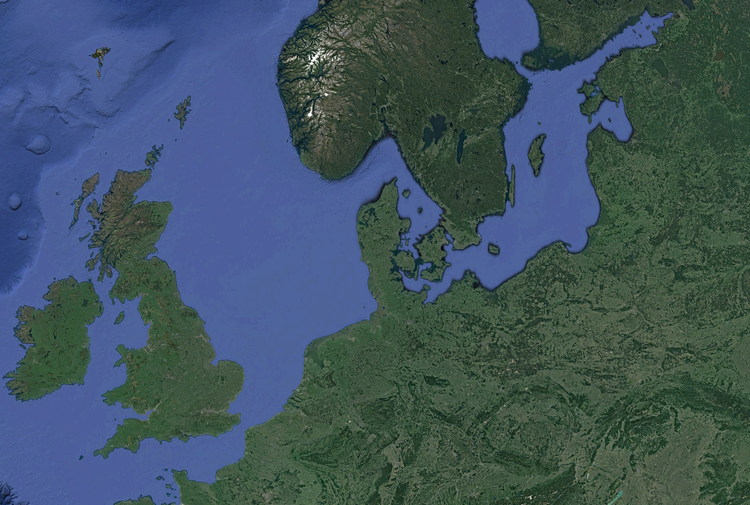
The Danelaw, 9th-11th century
Dr Alexander Thomas introduces the Danelaw; an 11th-century name for the areas of Northern and Eastern England in which the laws of the Danish Viking empire from the late 9th century until the early 11th century.
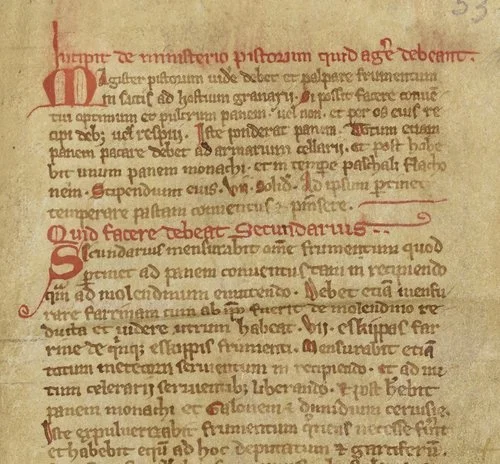
Animals and food at Rochester Priory, c.1235
Dr Christopher Monk explores details about animals and animal products consumed at Rochester Priory emerging from a section in Custumale Roffense concerning the monastery’s lay servants (folios 53r-60v).
On The Discovery of A Late Acheulean ‘Giant’ Handaxe From The Maritime Academy, Frindsbury, Kent’
Ingrey, L. et al., ‘On The Discovery of A Late Acheulean ‘Giant’ Handaxe From The Maritime Academy, Frindsbury, Kent’, Internet Archeology, 61.
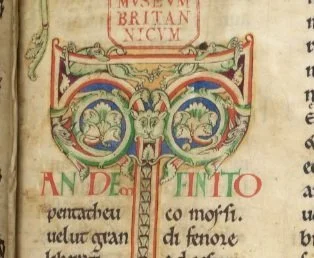
Elizabeth Elstob’s excerpts from Textus Roffensis 1712
Elizabeth Elstob made a facsimile of Textus Roffensis (c.1123), in two parts. Here, Dr Christopher Monk explores her handwritten copies of the three Old English Kentish law codes, unique to Textus, and her copy of the foundation charter of Rochester Cathedral with its marvellous decorated initial.
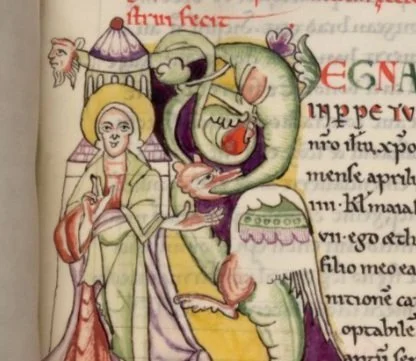
The Rochester Bible, c.1125-1140
Dr Christopher Monk explores The Rochester Bible; a richly decorated manuscript produced by the monks of St Andrew’s Priory, Rochester.
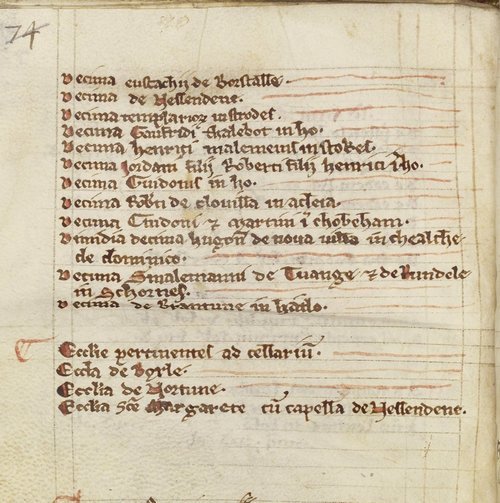
Food rents paid to Rochester Priory, c. 1235
Dr Christopher Monk explores the role of animals and animal products at the Priory of Saint Andrew at Rochester, for everything from manuscripts to candles and transport to food.
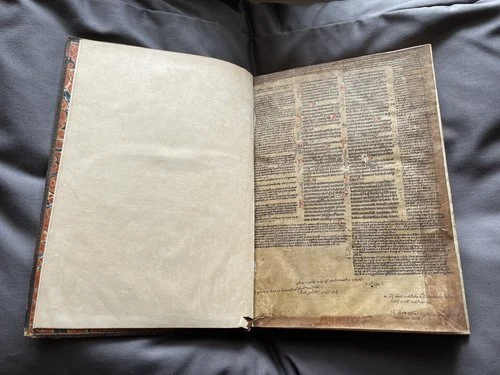
Bede, Opera (volume 2), with manuscript leaves, 1521
Dr Christopher Monk leaves through a volume of Bede’s second opera in the Chapter Library collection featuring two medieval manuscript paste-downs.
Kent: Building Stones of England
Willett, C. et al., Kent: Building Stones of England. 2nd edition (Swindon: Historic England).
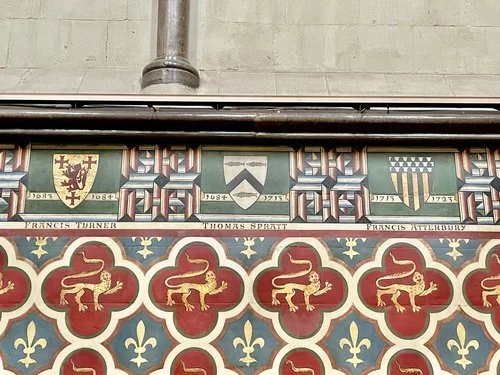
High Treason and A Wicked Contrivance?
Rochester Cathedral Chapter Library volunteer Myra Amor explores the stories of three successive bishops of Rochester each accused of treason.
Nine lives: The story of Biggin Hill
Martin, A., Nine lives: The story of Biggin Hill (London: Unicorn Publishing).
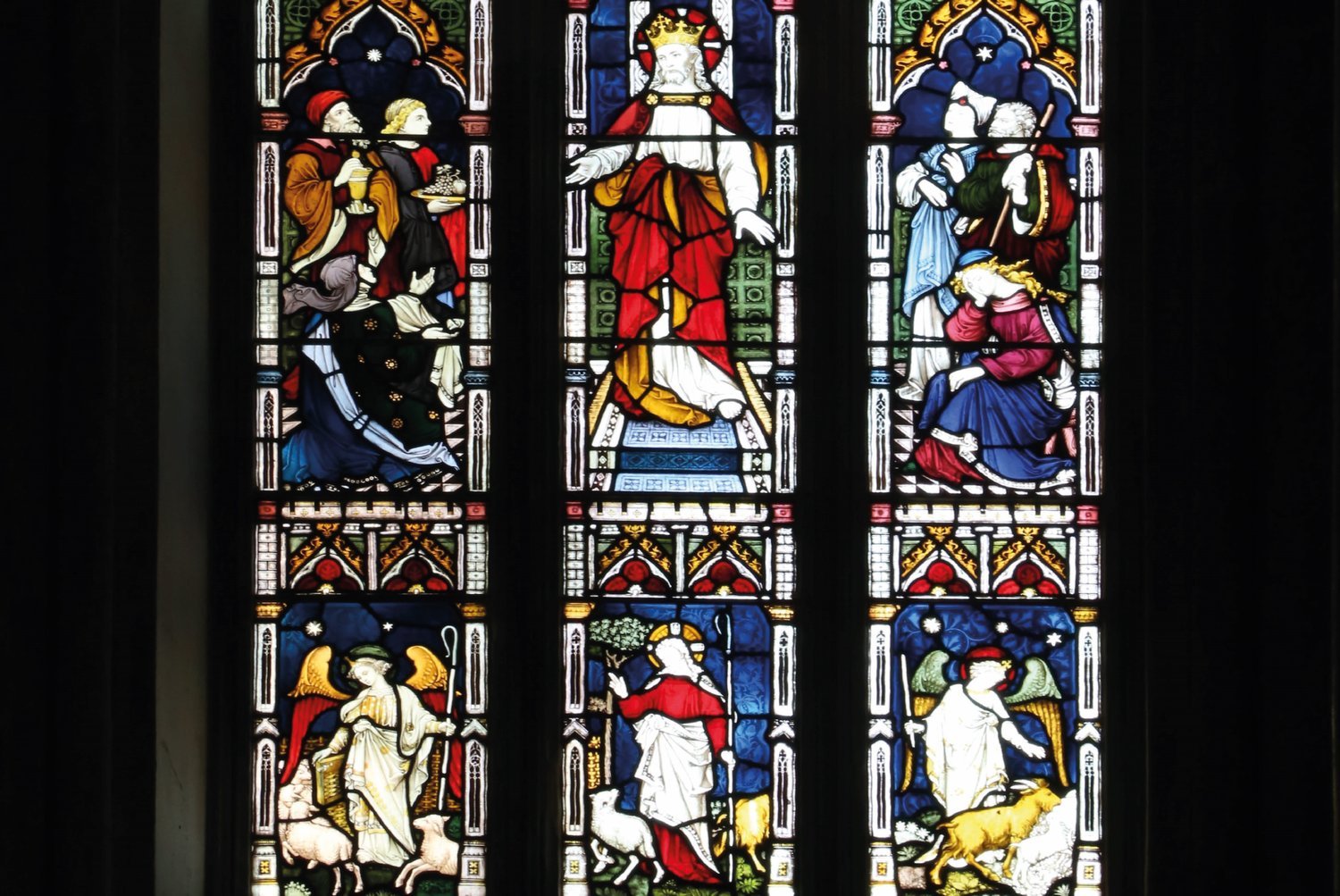
Mary Elizabeth and John Griffith, Canon of Rochester 1827-1879
T. H. James introduces Rev. Dr John Griffith and his wife Mary Elizabeth Griffith, benefactors to the Cathedral in the 19th century.
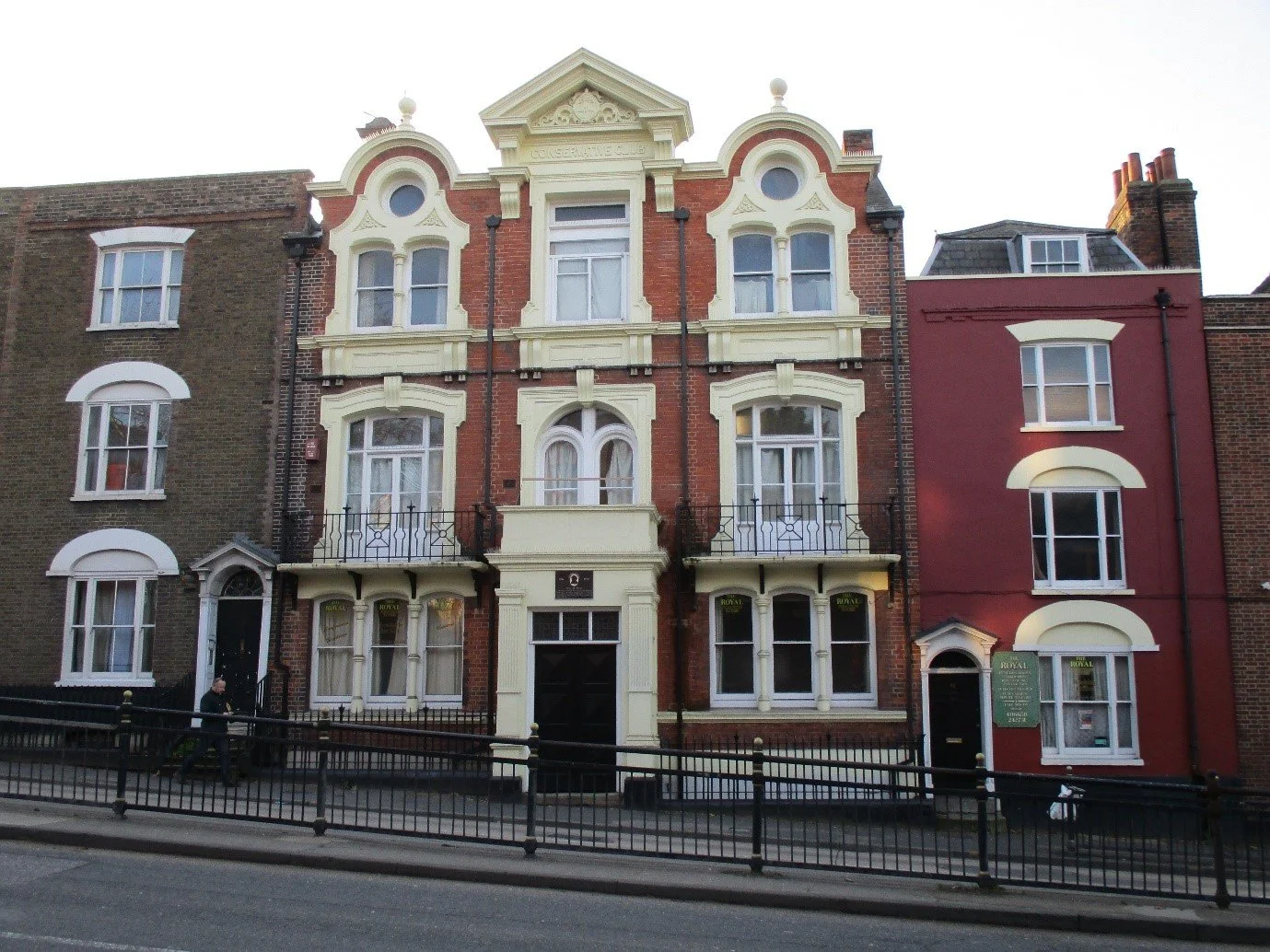
Sarah Baker and her Kentish Theatres, 1737-1816
A brief outline by Dr Jean Baker of the life and times of a remarkable but little-known woman (not an ancestor of hers) who played a significant role in the political, social and cultural evolution of Kent’s rapidly growing towns at the end of the eighteenth century.
‘Eadgifu, Governor of Kent, in a Lost Charter of Edgar’
Lloyd, J., ‘Eadgifu, Governor of Kent, in a Lost Charter of Edgar’, Anglo-Saxon England. Cambridge University Press 2023: 1-17.
Farming, Everyday Life and Ritual: 6,000 years of archaeology of Thanet Earth
Weekes, J. et al., Farming, Everyday Life and Ritual: 6,000 years of archaeology of Thanet Earth (Canterbury: Canterbury Archaeology Trust).
‘In The Shadow Of Saints: the long duree of Lyminge, Kent, as a sacred Christian landscape
Gabor, T., ‘In The Shadow Of Saints: the long duree of Lyminge, Kent, as a sacred Christian landscape’, Archaeologia, 112 (London: Society of Antiquaries).
A Trip Down Angerstein Line
Mills, M., ‘A Trip Down Angerstein Line’, Bygone Kent, 43, 2, 24-28 [development of wharf and railway at Blackheath & Greenwich].
Categories
Tags
- Agriculture
- Archaeological Methods
- Archaeology
- Architecture
- Artefacts
- Arts And Crafts
- Ashford
- Bibliography
- Biography
- Burials
- Canterbury
- Canterbury Cathedral
- Castles
- Cathedrals
- Chislehurst
- Christianity
- Church Fittings
- Church History
- Churches
- Clubs And Societies
- Cranbrook
- Dartford
- Deal
- Defences
- Domestic Architecture
- Dover
- Early Medieval
- East Sussex
- Ecclesiastical Buildings
- Ecclesiastical History
- Education
- England
- Erith
- Essex
- Excavations
- Faversham
- Flora And Fauna
- Folkestone
- Genealogy
- Governance
- Gravesend
- Guide Books
- History
- Houses
- Human Remains
- Industrial
- Industry
- Kent
- Landscape
- Literature And Poetry
- Local History
- London
- Maidstone
- Margate
- Medieval
- Medway
- Megaliths
- Memorials
- Meopham
- Military History
- Milling
- Modern
- Monasticism
- Monumental Brasses
- Museums And Galleries
- Orpington
- Ospringe
- Parks And Gardens
- Place Names
- Pottery
- Prehistory
- Railways
- Records And Archives
- Religion
- Roads
- Rochester
- Rochester Cathedral
- Roman Britain
- Roman Villas
- Romney Marsh
- Royalty
- Sales
- Sheppey
- Shoreham
- Social History
- Social Services
- Somerset
- Sports And Leisure
- Stained Glass
- Stone
- Surrey
- Sussex
- Swanscombe
- Tenterden
- Textus Roffensis
- Thanet
- Transport
- Underground
- West Sussex
- Women's Histories
The Papers section of the Kent Archaeological Society website features a diverse collection of standalone research outputs, including self-published papers, journal articles, dissertations, pamphlets, and short studies relating to the archaeology, history, and heritage of Kent. This area brings together both formal and informal research, offering a platform for sharing work that might not otherwise appear in traditional publications. It includes contributions ranging from independent studies and specialist articles to summaries of ongoing research and themed essays . We invite submissions from researchers at all levels, including academics, local historians, students, and independent scholars.
Submissions may include original research papers, revised dissertations, unpublished reports, conference papers, or shorter interpretative pieces that contribute to knowledge of Kent’s past. The section is particularly suited to material that is self-published or produced outside conventional journals, helping to make valuable research more widely accessible. Whether you are presenting new findings, revisiting existing evidence, or sharing a focused study, this provides an opportunity to reach a wider audience and contribute to the county’s growing body of knowledge.
Entries may be selected for inclusion in the Society’s Papers section to support research dissemination and encourage engagement across the archaeological and historical community. When submitting, please provide a clear title, author details, and a well-structured text, along with any relevant images, references, or links. Our editorial team may make minor edits for clarity and formatting before publication. By contributing, you help create an open and evolving resource that showcases research into Kent’s rich and varied heritage.