
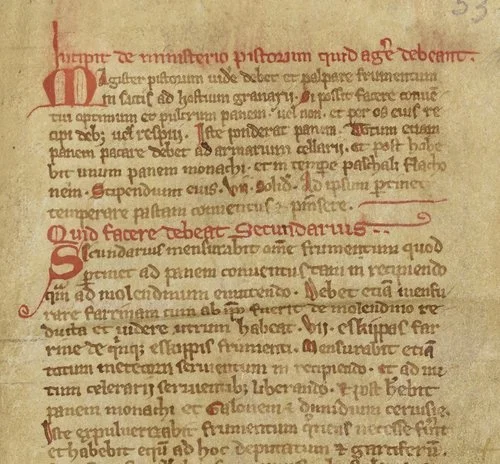
Animals and food at Rochester Priory, c.1235
Dr Christopher Monk explores details about animals and animal products consumed at Rochester Priory emerging from a section in Custumale Roffense concerning the monastery’s lay servants (folios 53r-60v).
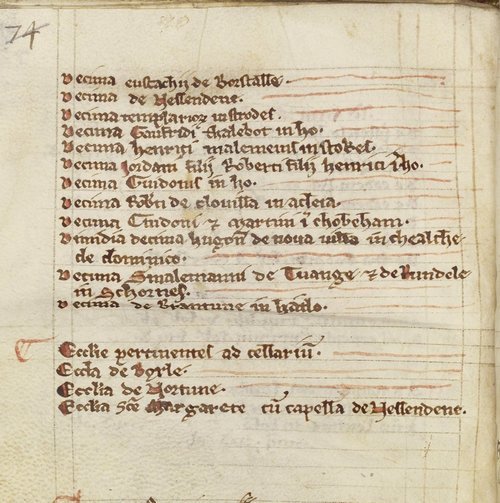
Food rents paid to Rochester Priory, c. 1235
Dr Christopher Monk explores the role of animals and animal products at the Priory of Saint Andrew at Rochester, for everything from manuscripts to candles and transport to food.

Charlotte Boyd (1837-1906)
Revd. Lindsay Llewellyn-MacDuff, author of Bertha's Daughters: A History of the Church in Kent, explores the life and work of Charlotte Boyd, one of the greatest benefactors to the Diocese of Rochester in modern times.
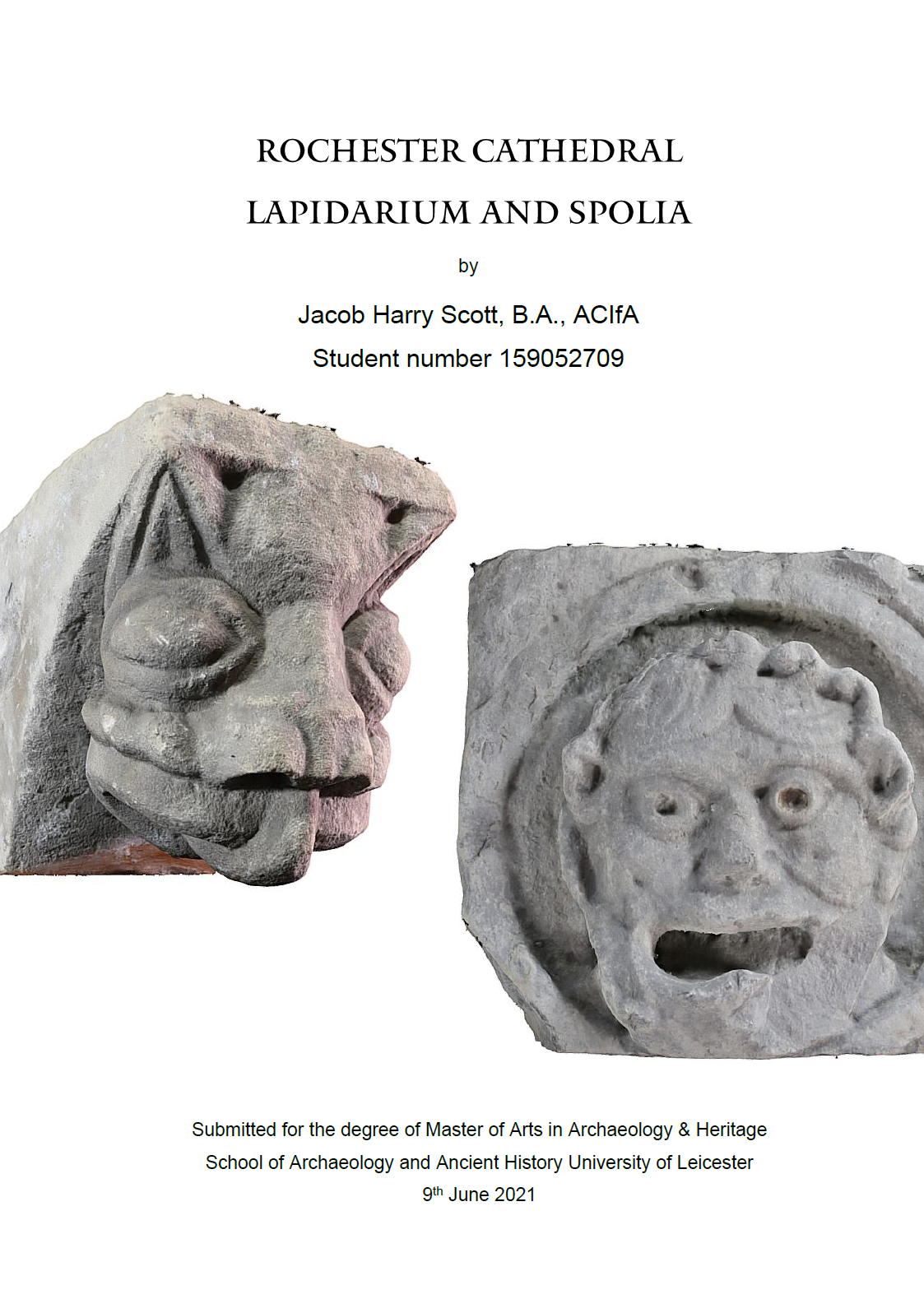
Rochester Cathedral Lapidarium and Spolia
Jacob Harry Scott, B.A., ACIfA, 2021, Submitted for the degree of Master of Arts in Archaeology & Heritage School of Archaeology and Ancient History, University of Leicester.
Redressing the Balance: Boxley 1146-1538; A Lesser Cistercian House in Southern England
Postgraduate research degree thesis by Elizabeth Eastlake submitted to The University of Winchester, December 2014.
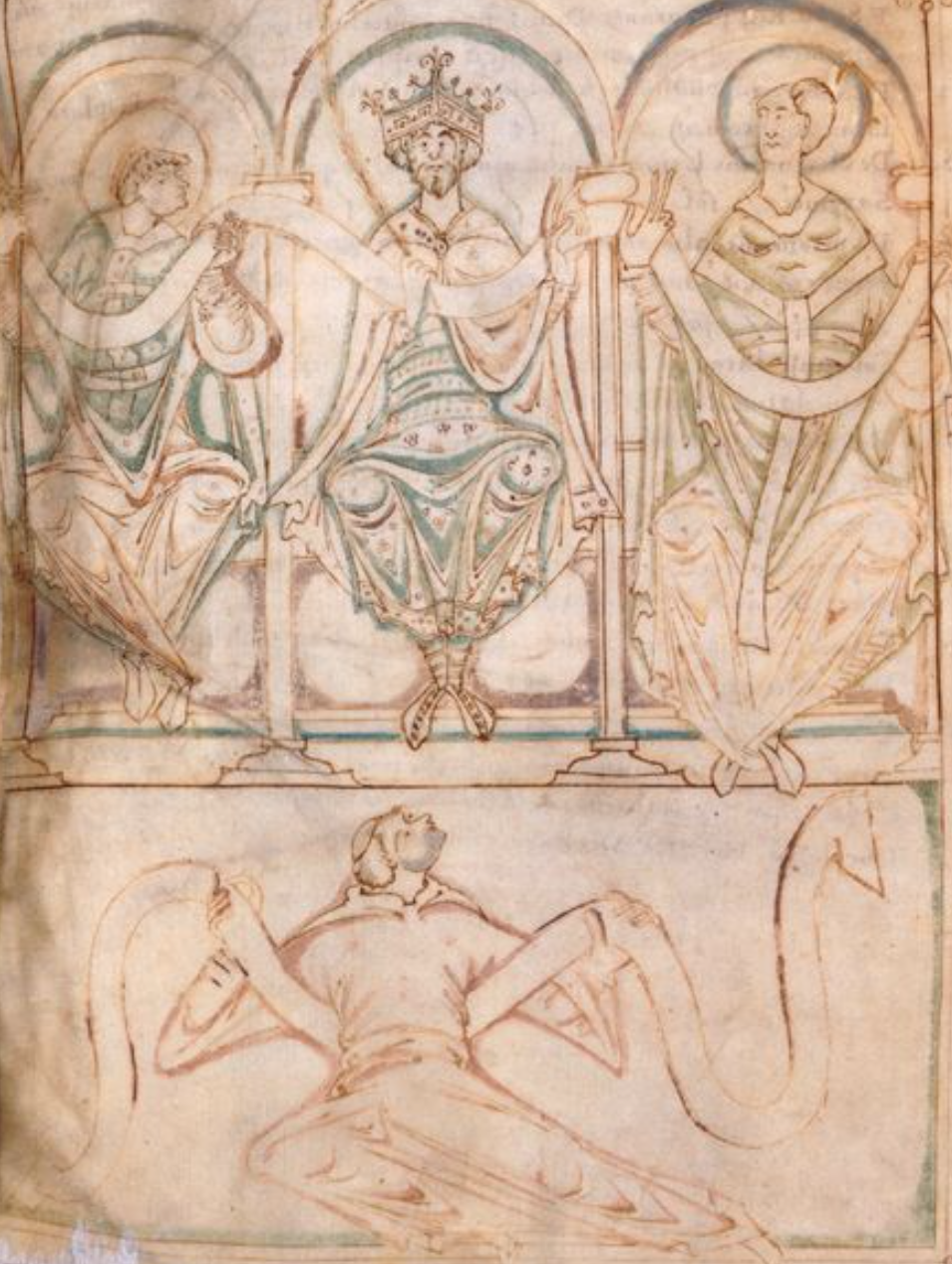
Two previously unrecorded marginal illustrations in a Christ Church, Canterbury Manuscript: Cotton Tiberius A. III.
Tracy-Anne Cooper, 2005, Kent Archaeological Society Paper No. 14. Maidstone: Kent Archaeological Society.

Basan and Bata - The Occupational Surnames of two Pre-Conquest Monks of Canterbury
Tracey-Anne Cooper, 2004, Kent Archaeological Society Paper No. 12. Maidstone: Kent Archaeological Society.
Categories
Tags
- Agriculture
- Archaeological Methods
- Archaeology
- Architecture
- Artefacts
- Arts And Crafts
- Ashford
- Bibliography
- Biography
- Burials
- Canterbury
- Canterbury Cathedral
- Castles
- Cathedrals
- Chislehurst
- Christianity
- Church Fittings
- Church History
- Churches
- Clubs And Societies
- Cranbrook
- Dartford
- Deal
- Defences
- Domestic Architecture
- Dover
- Early Medieval
- East Sussex
- Ecclesiastical Buildings
- Ecclesiastical History
- Education
- England
- Erith
- Essex
- Excavations
- Faversham
- Flora And Fauna
- Folkestone
- Genealogy
- Governance
- Gravesend
- Guide Books
- History
- Houses
- Human Remains
- Industrial
- Industry
- Kent
- Landscape
- Literature And Poetry
- Local History
- London
- Maidstone
- Margate
- Medieval
- Medway
- Megaliths
- Memorials
- Meopham
- Military History
- Milling
- Modern
- Monasticism
- Monumental Brasses
- Museums And Galleries
- Orpington
- Ospringe
- Parks And Gardens
- Place Names
- Pottery
- Prehistory
- Railways
- Records And Archives
- Religion
- Roads
- Rochester
- Rochester Cathedral
- Roman Britain
- Roman Villas
- Romney Marsh
- Royalty
- Sales
- Sheppey
- Shoreham
- Social History
- Social Services
- Somerset
- Sports And Leisure
- Stained Glass
- Stone
- Surrey
- Sussex
- Swanscombe
- Tenterden
- Textus Roffensis
- Thanet
- Transport
- Underground
- West Sussex
- Women's Histories
The Papers section of the Kent Archaeological Society website features a diverse collection of standalone research outputs, including self-published papers, journal articles, dissertations, pamphlets, and short studies relating to the archaeology, history, and heritage of Kent. This area brings together both formal and informal research, offering a platform for sharing work that might not otherwise appear in traditional publications. It includes contributions ranging from independent studies and specialist articles to summaries of ongoing research and themed essays . We invite submissions from researchers at all levels, including academics, local historians, students, and independent scholars.
Submissions may include original research papers, revised dissertations, unpublished reports, conference papers, or shorter interpretative pieces that contribute to knowledge of Kent’s past. The section is particularly suited to material that is self-published or produced outside conventional journals, helping to make valuable research more widely accessible. Whether you are presenting new findings, revisiting existing evidence, or sharing a focused study, this provides an opportunity to reach a wider audience and contribute to the county’s growing body of knowledge.
Entries may be selected for inclusion in the Society’s Papers section to support research dissemination and encourage engagement across the archaeological and historical community. When submitting, please provide a clear title, author details, and a well-structured text, along with any relevant images, references, or links. Our editorial team may make minor edits for clarity and formatting before publication. By contributing, you help create an open and evolving resource that showcases research into Kent’s rich and varied heritage.