
Naval beer supply, Dover
The Maison Dieu at Dover was for a long time a naval victualling yard and so, to mark the building’s reopening after a fantastic £10.5m restoration project, this blog post by Andy Plumbly focusses on the supply of beer to the Royal Navy at Dover.
Supplying the Royal Navy with food and drink was a mammoth task especially during the eighteenth and nineteenth centuries when the Navy went through a period of considerable expansion. Formed in the 1680s to address previous shortcomings, the Victualling Board maintained yards at all the key ports. Dover was one of the first to have a brewhouse, which was essential to provide the men's ration of a gallon of beer a day. It remained in continuous operation until the 1820s, often supplementing supplies from the Navy's other, larger breweries.
A wonderful document held at The National Archives from 1728 entitled A Particular State of the Port of Dover & how far the expense of that Port may be retrenched [ADM110/10 P32 8 April 1728] reports on the state of the victualling premises and gives a wonderful insight into the victualling operation at Dover which was based at the Maison Dieu.
Here are a few excerpts …
In return to your letter of the 19th past, signifying to us the direction of the Right Honourable Lords Commissioners of the Admiralty for our laying before them a particular state of the Victualling Office at Dover in every circumstance relating thereunto and what part of the Public Charge now attending the same may be retrenched without inconvenience to the Public Service, we are to acquaint you for their Lordships’ information that some of the members of this Board having visited the said Port, by their Lordships’ permission in June last, and taken a very particular view of the Victualling Buildings, we shall therefore take leave to lay before their Lordships the observations which occurred to them with respect to the present condition of the said Buildings and the conveniences and inconveniencies thereof.
The Bakehouse situate also at the Maison Dieu appeared to be very inconvenient in many respects, the Building itself very old, and thought by the aforesaid workmen to be very crazy(?), the ovens therein ill placed, nor is there any convenience over three of them for drying bread, and the Loft up one pair of stairs had at a great expense been made improper for keeping bread, but the situation of the Bakehouse is yet more extraordinary, being placed at the greatest distance the ground admits of from the River, where the Mill stood for grinding the wheat, which being wholly decayed is taken down, as also from the Bavin Stack. The Wheat Loft is equally inconvenient, being up two pairs of stairs in the same Building, no less than 22 feet perpendicular, from the foot of which to the Mill Door is 270 feet, and from the Stair Head to the Bolting Mill 75 feet, the consequence of which distance, besides the delays and obstructions in carrying the wheat and meal from one place to the other, and the opportunity it affords for embezzlement, occasions likewise no small expense in carts, horses, and additional hands required for doing thereof.
The Brewhouse situate likewise at the Maison Die appeared to be inconvenient in its contrivance, the Malt Loft being in the First Floor when it is to be ground is put into sacks, carried up stairs 15 feet high to the Hopper, from whence it runs down 11 feet into the Malt Case(?), and from thence is brought up again in sacks to the Mash Tun, and by a report in 1717 from Mr Thomas Bone, late Master Brewer at the Hartshorne, it appears that the said utensils cannot be put into regular order without much charge and that the doing it would not admit of reducing the number of persons employed, but only lessen their labour.
The Cooperage appeared to be regular and convenient for that Service, was there occasion for using thereof. The Slaughter Houses with some Storeroom at the Maison Dieu for lodging provisions are old & inconvenient but are kept wind and water tight.
At the Pier are two very good Storehouses capable of containing near 300 tuns of provisions, as also two Dwelling Houses inhabited at present by the Storekeeper and Checque, which two Storehouses and, by converting one of the Dwelling Houses into a Cooperage, and other conveniences, will we conceive be sufficient for answering all the present Services of the Port of Dover, which we find also to be consistent with the opinion of the Members who visited that Port in December 1720, whose proceedings were laid before their Lordships in a letter to you dated the 17th of that month.
And it being our opinion that the Buildings at the Maison Dieu should be cleared of the casks and other stores now there, we humbly propose as a further saving to the Crown that the Agent’s Dwelling House, which is now in a good condition, and has a large piece of garden ground belonging to it, should be let, the rent whereof it is conceived will keep the same and the other Buildings contiguous thereto in repair, which Buildings may likewise be let, if a Tenant can be found for them, with a Clause of Redemption whenever the Service shall require the use of them again, which e think can never happen but in a great war with our near neighbour.
If you’d like to read the whole document please click on this pdf link
Andy Plumbly is Honorary Secretary of the Navy Records Society and has just completed his PhD at King's College London - Thirsting for Glory, the Beer Supply to the Royal Navy in the long Eighteenth Century, c1680-c1840
For more information on the Maison Dieu please see https://www.maisondieudover.org.uk/
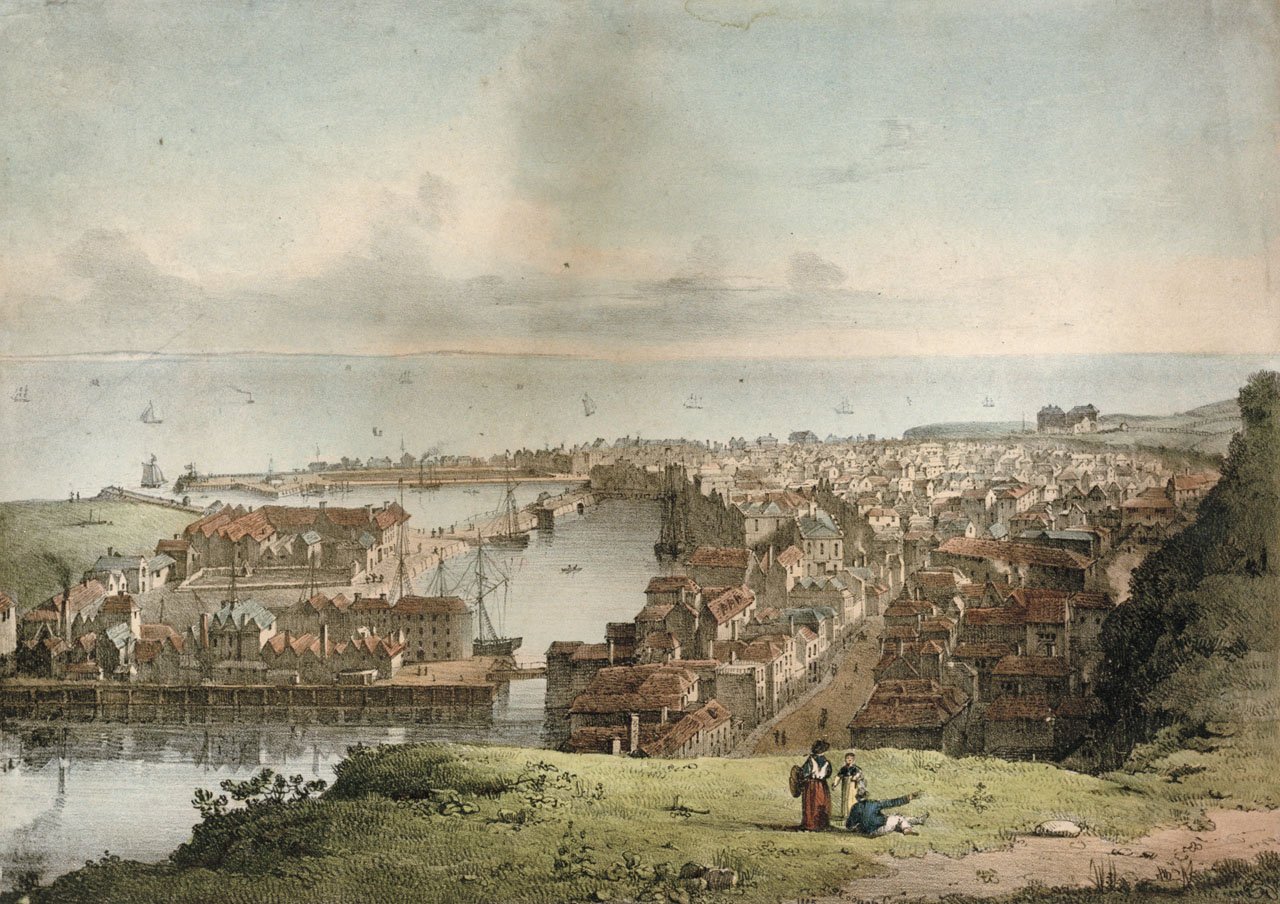
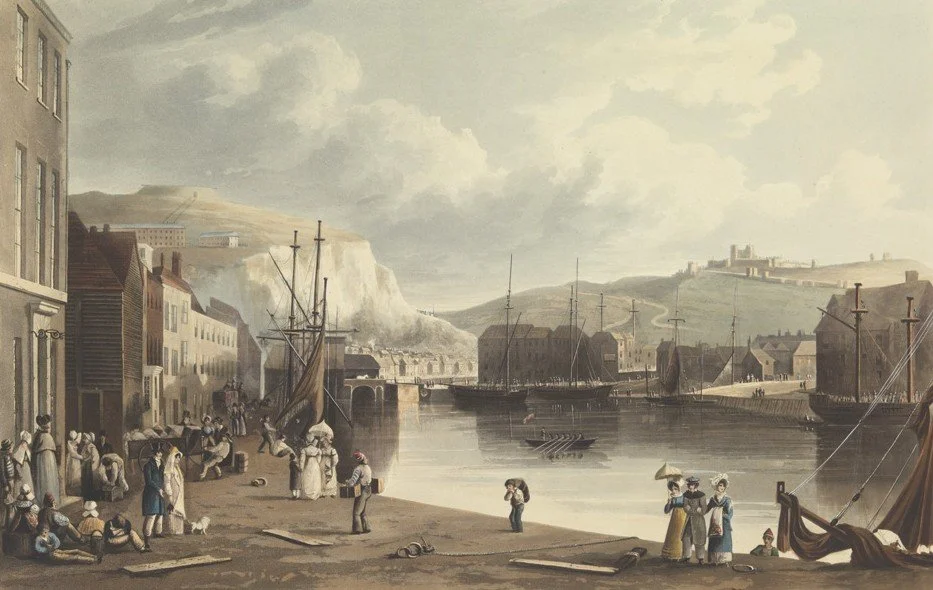

Views of Dover harbor (National Maritime Museum, PU0982, PY9683 and PAI7087).
