
Heritage Harbours – Ramsgate
Heritage Harbours (including Heritage Inland Ports) is a joint initiative between local groups and Maritime Heritage Trust, National Historic Ships and Historic England to help safeguard and conserve our most historic locations with the buildings, quays, shipyards, and environments that make them special. These are the places on the coast and inland where you can see traditional ships and boats still in operation and the buildings, facilities and people that make that possible.
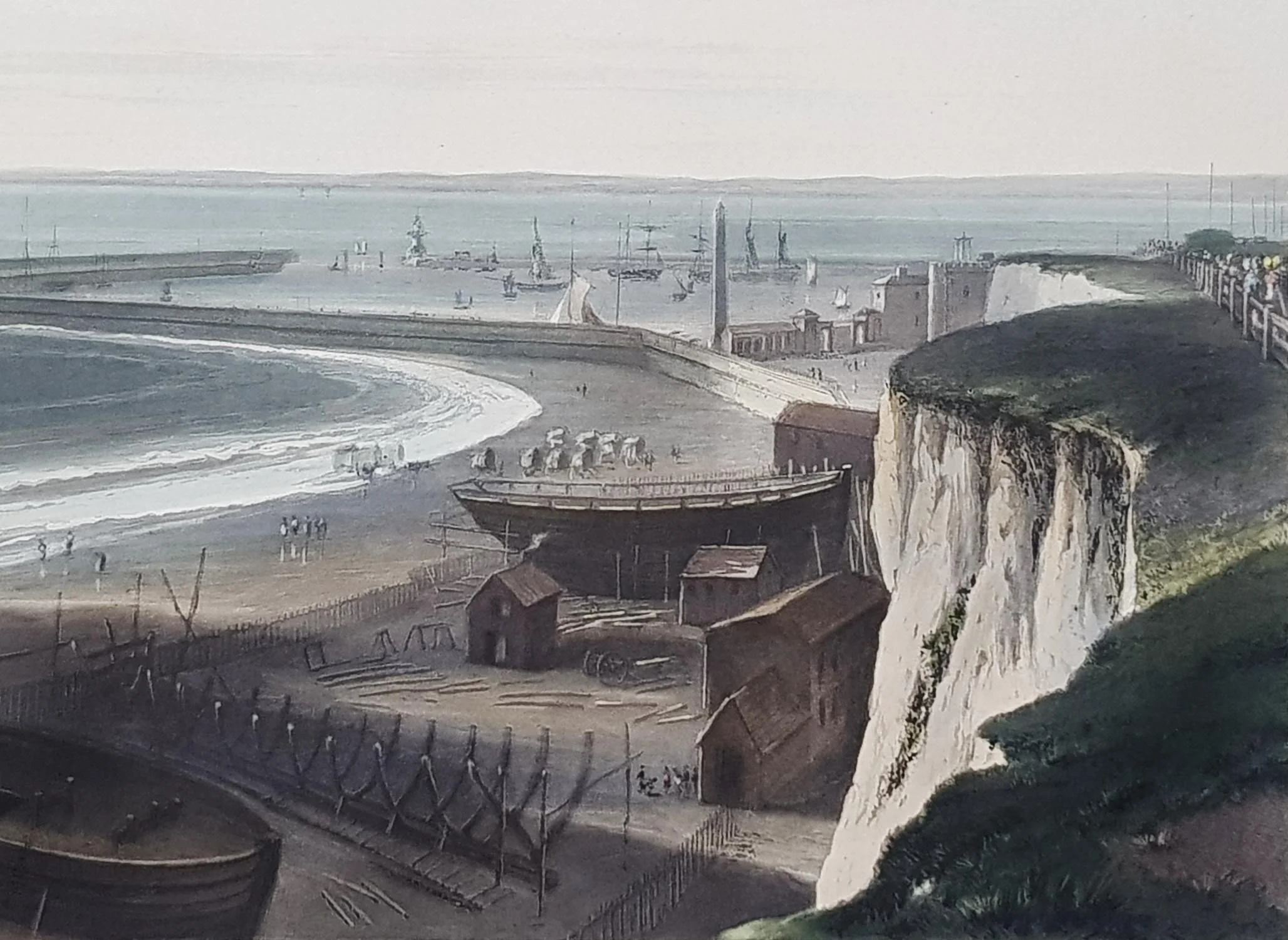
William Daniell (1823) Ramsgate, Kent.
This joint initiative seeks to recognise the value ageing ports and harbours - coastal or inland - still have today. Often located in urban areas, there is potential to breathe new life into existing historic buildings; moorings; maintenance facilities; and waste land. A Heritage Harbour or Heritage Inland Port should reflect the story of the area's maritime heritage; offer a safe haven for local and visiting historic vessels; and connect with the local community. There are currently three Heritage Harbours in Kent: Faversham, Sandwich and Ramsgate. This blog focuses on Ramsgate's involvement in the initiative.
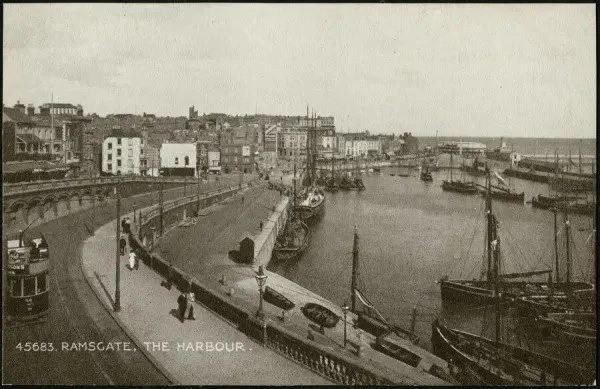
Ramsgate Harbour, 1901–1937 © Historic England Archive.
Ramsgate joined the Heritage Harbours initiative in July 2024. The port’s harbour is Grade II* listed and is the only royal harbour in the world, an honour bestowed by King George IV in 1821.
Today the Royal Harbour combines maritime heritage with the activities of a 21st century harbour and thriving waterfront café culture. Windfarm operations, a RNLI station, shipbuilders, boat yards and a local fishing fleet are neighbours to a Georgian powder store and 18th century Smeaton crosswalls, sluices and dry dock. The Victorian architecture of the Royal Temple Yacht Club, Sailor’s Church and Smack Boys’ Home sits side-by-side the many restaurants and bars that line the water’s edge.
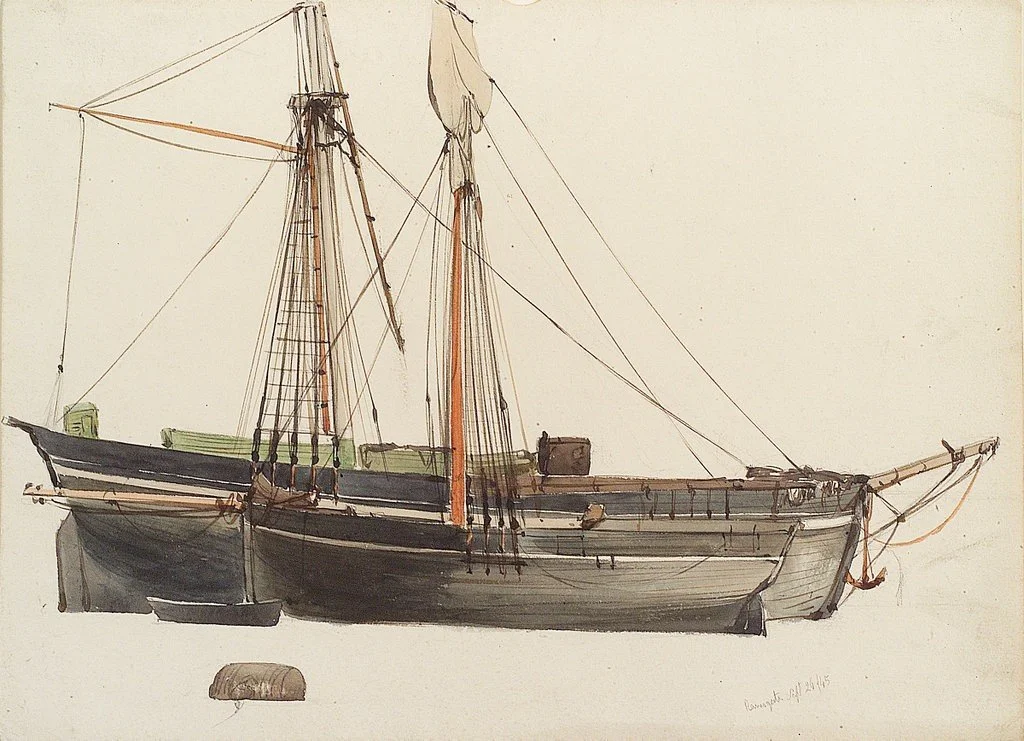
Thomas Sewell Robins (1845), Ramsgate Boats © National Maritime Museum, Greenwich, London.
Supported by the Heritage Harbours initiative, the plan is for the Royal Harbour to be front and centre in promoting the town’s beautiful architecture and heritage attractions. The Georgian Grade II* listed Clock House dominates the quayside, and in 1819 it was the endpoint for Ramsgate’s own meridian line – 5′ 41″ ahead of Greenwich Mean Time. Today it is the home of the Clock House Museum, reopening in 2026 with objects and stories from across the history of the Royal Harbour. Until then, exhibitions and events will be at various venues in and around the Royal Harbour.
Around the corner from the Royal Harbour at the base of the East Cliff are Ramsgate Tunnels, the museum for the UK's largest network of civilian wartime tunnels, with stories from underground living in the Second World War when part of the system evolved into an underground city with over 1,000 permanent residents.
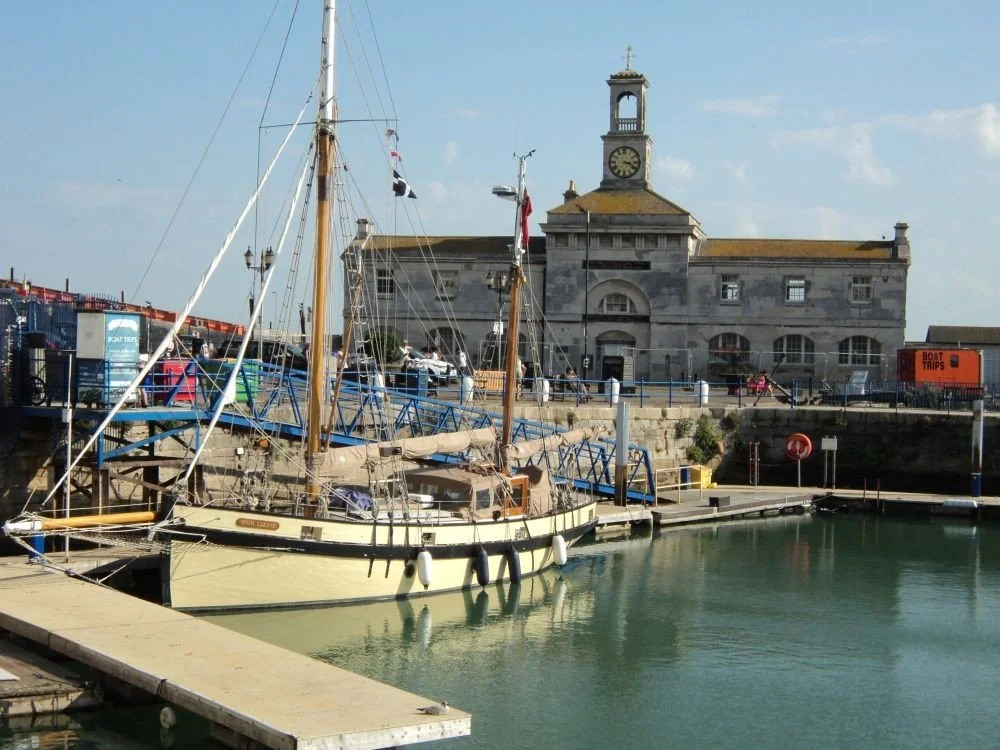
Ramsgate Royal Harbour and Clock House © Maritime Heritage Trust.
From 16th May 2025, Ramsgate’s Royal Harbour hosted the 85th anniversary return of the Dunkirk ‘Little Ships’, with more than 50 of the original vessels that took part in 'Operation Dynamo' to bring Allied soldiers back from beaches in France, coming to Ramsgate together with around 100 other historic watercraft.
Plans are being drawn up to welcome more heritage vessels to Ramsgate and to host regattas and other events for historic ships and boats in the Royal Harbour in the future.
For more information see:
https://ramsgate-society.org.uk/heritage-harbour/
https://maritimeheritage.org.uk/uk-heritage-harbours/ramsgate
Or contact: heritageharbour@ramsgate-society.org.uk
