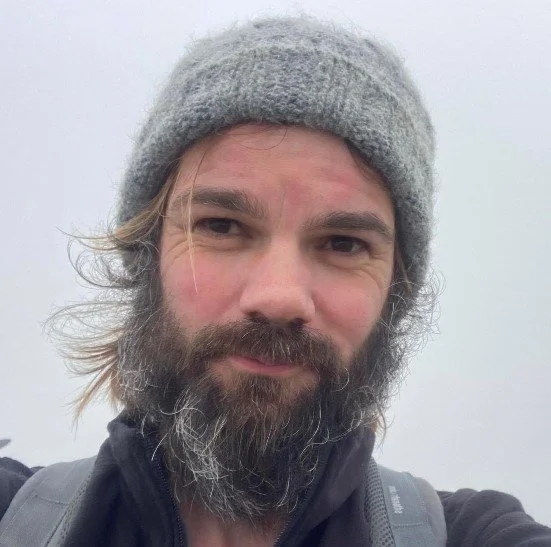
Trapped in time: a closer look at Ötzi, Star Carr, and the not so primitive ‘early people’
Description: The latest in a series of online talks hosted by the KAS, with Giselle Király BA, MSc, Fieldwork Project Officer and Human Osteoarchaeologist, PCAS Archaeology Ltd.
Transcript: and welcome. I hope you're all doing wonderfully. Um, we've made it. It's our first birthday. We are one today. So, we're celebrating in style. Uh, there's not too many first birthday parties where you can drink through it. So, we'll make the most of it. Uh, we should probably ask Jacob if he will sing happy birthday for us. Do you reckon? Maybe after a bit more wine. Um, okay. So we have managed a whole year's worth of incredible lectures almost all of which are also accessible on our YouTube channel. So if you missed any do go and check them out. It has been another busy month for us. I can see lots of messages in the chat. I hope it's nothing too important. I'll have a look afterwards. But um yeah, we've been working hard to bring you the latest news and features and events and archaeology of the county. The by annual magazine is with the designer right now. So we will it should be with you all very soon. And the website as always is run full of incredible heritage treats. Our curators been out and about meeting schools and community groups. And we are in the final throws of our fieldwork season. So lots going on. But we all know the best the society has to offer is right here. And we have a wonderful talk for you tonight. It's my birthday present to you all. Okay. We hope to avoid any technical issues, but please do bear with us if there are any problems. Jacob will steer us through. As always, if you are not a member of the society, please do think about joining us. It works out only about £330 a month, which is 1.70 cheaper than my regionally appropriate cany sparkling birthday wine. And for that, you'll receive a copy of our yearly journal, Archaeologia Caniana, full of the most current historical and archaeological research in the county. You'll also receive our bianual magazine, regular newsletters, exclusive access to our collections, conferences, and selected events, opportunities to get involved in excavations and research projects. and you will allow us to keep putting out content such as these wonderful free online talks doing outreach in schools and community groups and seminars um which you know we hope is bringing the benefit of Kent history and heritage to us all. So do check out the websites for details of how to become a member. A bit of housekeeping the talk will last about an hour after which we'll have time for questions if you have any. Please keep yourself on mute with your cameras off throughout so that we can hear the speaker clearly during the Q&A. You can either use your hands um the hand raising feature and we'll unmute you when it's your turn to ask the question personally or if you prefer you can type the question in the chat box and we will read it out for you. I hope it goes without saying but please do be courteous and polite to our speaker and to each other. We will be recording the session and it may be posted on our video channels in the future, but no personal data will be shared. And if you have a question but you would prefer it not to be published, just send us an email and we'll make sure that it's not on there. Um, so if I can just ask everybody um to switch off their cameras and microphones so that we can hear our speaker nice and clearly throughout. So onto our speaker. I'm so so pleased to welcome a good friend of mine and incredible archaeologist, Jazelle Karelli. Jazelle is a commercial fieldwork project officer and human osteologist for Picass, which I think was formerly pre-construct archaeological services. Is that right? Y um leading a range of sites across the country. She specializes in osteoarchchaeology analyzing skeletal an assemblages but is a master of many archaeological trades and has led fieldwork in Europe, Georgia and the UK. Jazelle is also a pioneering community archaeologist working with many groups to promote well-being in archaeology including the Ministry of Defense's Operation Nightingale helping veterans on their road to recovery through archaeology and engaging in community projects across Britain at every opportunity. She has a bachelor's degree in cultural anthropology from Western Washington University in the States and an MSE in forensic anthropology and bioarchchaeology from UCL. She's worked as an assistant forensic anthropologist and repatriation technician for local native tribe and worked with the DPAA in Europe, but I'm not sure what the DPAA is. I'm sure she will tell us very soon. Uh, you may also have seen Jazelle gracing your television screens as she's a regular host on many well-known archaeological shows including History Hit and of course Time Team. What you may not know is that Jazelle is also a football genius and was the star player for the Kent Archaeological Society's football team last year in the Archaeological answer to the Champions League, the Monomer's Cup. Superstar winger, scored plenty of goals, scored far more than me. Uh, so without any more from me, I shall pass it over Jazelle. It is over to you. Oh my god, I've got I've got a whole slide about who I am, but I think you just did the best thing ever. Okay, that is really funny. Um, let's see here. Working on sharing it. Let's see. Can you all see that? Yeah. Cool. Um, great. Let me just shrink myself in the corner. Right. So, welcome everybody. Um, this is the talk. It's titled Trapped in Time, a closer look at its star car and the not so primitive early people. So, we're going to look at frozen conditions in ice, anorobic pee bogs, flint scatters. We're going to look at a boat. Um, so just a couple different things to learn about primitive people and decide whether or not primitive people really deserve the term primitive. I put early people in there because I prefer early people and I think after this hopefully people will as well. So who am I? Uh, I'm Jazelle. I am a fieldwork project officer uh doing commercial archaeology. For those who don't know what commercial archaeology is, that is before quaries, before roads, before houses. um we go in and we basically do rescue archaeology. That's like how I like to think about it. So we go in and get as much history information as we can and then they can do what they want with the site. I am a human remains specialist as well for PCAS. Um so any sites we have um I don't know if you can see it but behind me I've even got a a whiteboard of one of those projects. So any sites we have, any cemeteries, uh I'll basically work on those in the field but also at home uh analyzing the the bodies. And then uh I am a community archaeologist. So I do operation night and which is for well-being as Craig mentioned. Um well-being for military serving and veterans. Um and it really helps some archaeology does. Um and I bet it helps a lot of other people. A lot of you who've just done it as a hobby get to know people. It's really really special. Um and I am a part of time team and Craig mentioned DPAA as well which DPAA is the department of defense in the states does a recovery program for missing and killed in action war veterans from World War II and other times as well. Um but there's some projects with that. So, actually July 19th uh online uh on YouTube, the next time team I think it'll be the next time team video is coming out and that's about um a dig I was on with DPAA. So, that'll be kind of cool. I also uh own Dirt Node, which is a little uh hack company um because I'm a dirt nerd and I think all of you are as well. Um and then I really like old stuff. So, that's why I think this topic is so important. I mean, I've got a picture of me here with a Roman mosaic. Um, but I actually think that all the older stuff is way more interesting and a lot of it is because it's not written down. So, it's all about how we interpret it and how there's misinterpretations and I think it's really important. So, um, yeah, we'll we'll get more into it. So, a little bit of a warning. There are human remains pictured at the very end. Um, the Iceman is a mummy. So, uh, something to consider if you don't like that. um uh the end of bronze age boats I believe it is um is um but then otherwise take photos of slides um do whatever you'd like. So what we're going to do today is we're going to learn about different early archaeology sites from local ones, so Kent area to international ones. And we're going to learn about what we've what we've learned since digging these sites. And then we're going to hopefully redefine primitive like I mentioned before. So in the past 40 years, for example, have we learned more information that we can redefine primitive? 40 years ago, people using primitive all the time. Now, it's a bit more of an outdated term, but you still hear it. And I found myself saying it the other day as a way to explain something simple and um I think it's important to notice that and hopefully we can change our perspectives and on stereotypes of that early history. So, I put um a bunch of different papers in about primitive people where the word primitive was used. took out primitive. Um, well, I guess it caught this caught it a little bit in the green in the bottom, but uh, this is a word cloud of what people write about. They write about primitive people. So, these were the ones that really stuck out to me who are univilized, rudimentary, and unsophisticated, which I thought was a bit cruel. Um, I also saw Caveman, which uh, you know, that is stereotypical. That is what people think. So, uh, it's very interesting to think about all of these different ways people interpret primitive and then the truth behind it. I also put it into AI. So, this on the left was I just put in a primitive person and it came up with this. Uh, and then on the right there, you can see um three people, somebody just holding a stone, and then at the very bottom, you've got someone sharpening a piece of wood on a on a rock. So, that's not exactly accurate either, but AI doesn't really know what to do. I mean, they've got excellent clothing on, um, excellent hair. Um, so not not too accurate just yet. And then um just looking through different people's perspectives on primitive people and how I think about it and how I talk with people on sites about it. People think of them as simple and before written records, foraging and hunting, um smallcale social organization. It's those hunter gathering groups and non-industrial. So you don't really hear about um any production sites really. Um, I found somebody had written, "Primitive societies were often hunter gatherers with rich oral traditions." And I thought, "That's interesting. They wrote oral traditions because why does that matter really? Does that make someone primitive?" And I think that we need to be less writing focused. I wrote Romans on there because everyone thinks about Romans as, "Oh, they wrote everything down. They were so elite, so advanced." Um, but some of these early societies were as well. So, we're going to look at five different spots. So, we've got four in England and one over in Italy. So, we'll start with the top two there, uh, the blue and the yellow star. And so, here is a lovely artistic rendition of the Mesolithic. Um, Mesolithic, I think, sounds far away for a lot of people. It's 11,000 years ago to about 6,000 years ago. It sounds very far away. And I think people uh it's easy to think, oh, people must have lived in cave mealithic. I mean, lithic, it sounds so old and stone age, Stonehenge, you know, that kind of stuff. Um, but you can see in here this picture, they've got a fire, they've got bows and arrows. Um, they have a hunting technique, they've got houses. So, our perception, even how artists uh do impressions of it, I think it's all a bit warped. Um, and it's even much more advanced than this. So, uh, that simplified version of mealithic people. Let's let's change that. So, we're going to start with Starcar, which is quite a famous site. Um, in Northern England for people who are not from around here. So, if you kind of work left to right, um, you've got Scarra listed there. And south of Scarra is the Paleo Lake Flixen. So, this doesn't exist anymore. Um, it's set in a valley, the veil of Pickering there. set in a valley. Um you if you ever go to this area, you can actually look out and really easily imagine this lake because of how the valley is, but the lake's not there anymore. Uh now it's basically hidden under layers of Pete and Farmers Fields, but that is where Star Car was located. And so we're going to look a little bit into Star Car. So Star Car, 11,000 years old. This is a really really good artistic rendition of Starcar. Um these artistic renditions I put them in because they're really really important. It's the best way. It's usually archaeologists who are doing these as well and historians, but it's the best way that we can actually visualize this historical time period. We don't have any photographs obviously, but we don't have paintings. We have nothing like that. The best we have is cave paintings. Um, but these renditions really put everything, I think, into perspective and can kind of match up everything we've learned into a single photograph. So, we've got um a small group of people. They were nomadic in the Mesolithic. Um, so people kept changing where they lived. People lived in huts made of wood and mud and straw. So, you see that in the background. Um, they used the plants and the animals around them. They were very big environmentalists. Um, they kept dogs as pets, which I think a lot of people might not know. um which is really cool that we know that information. Uh they hunted. Now there's difficulty and there's strategy in hunting and that's very underrated. And then uh they live next to water. That's really really crucial. We still live next to water. Everyone lives on the coast or they live next to a big river or at least a lake, something like that. We all utilize water. Um, if you look at this, you've got a boat in the middle there, and you've got this sort of like a dark boardwalk bit, and that is very crucial for what was found at Star Car. So, uh, on the top right, you've got another digital impression this time of those boardwalks. And so, you can see houses, you can see, um, the boardwalk themselves, and then on the bottom, you can actually see what was uncovered during the excavations at Starcar. So, you've got the boardwalk which would have been in basically the same exact place um as it was 11,000 years ago, which is mental. Um, and basically over time in this environment, this anorobic environment, layers of plants and leaves and all of that built up over time and because it was water logged, they basically just decomposed in this weird spot creating pete. And then that pete seals in stuff and keeps it looking fresh, which is the most bizarre thing as an archaeologist. You don't really expect fresh things. Um I've actually got a little um container of hazelnuts from these sites up in up in the veil of Pickering and they look fresh, which is a really bizarre thing. Um but to think they're 11,000 years old is just mental. Um another one to look at is Noame Hill. Now this is a really recent site. Um there have been little excavations, little test fits and things like that, but Noame Hill, as you can see, it's an island in the middle of Lake Paleo Lake Fixton. And so this was dug um two or three years ago with uh Chester and Manchester unis. Um and you can see and York Uni as well. And you can see um that it would have been difficult to get to this island. You're not really going to swim. That's a bit far to swim. Um, and you'll see that there are things deposited there. So, you're probably going to take a boat. So far, there's no evidence of boats um on this Paleo Lake, but as in that artistic rendering, likely there were boats. Hopefully, we can go back and we can dig and we can find out if we can find a boat. That'd be amazing. Um, yeah. So, here's a picture from No Name Hill. You can see where we're I suppose where stood when this photograph when I took this photo. Um, you can look out. That's where the the farming fields are. That's all where the Paleo Lake would have been. We're stood on the island and actually where that water is in that first trench, that's basically where the the edge of the water would have been. So everything's thanks to global warming, things have kind of shrunk. The pete has dried out a lot, but you can really you can still imagine it, I think. And this is what it's like. Uh people are kneeling on these boards. There's pe underneath the people. And then you can see that they're lifting layers of pete and clay up. They're using little wooden tools and it looks like it's fresh stuff. Um it's it's absolutely crazy. If you look um in between the two girls on the left, there's a a large bone. That's an or scapula. And or no longer exist. So it's quite a surreal thing to be digging something like that. So here's another I think this is a video. Yeah. So you can see just how delicate people have to be, but how clean that looks and how clear it is, which is really cool. I get a bit in depth here on on the archaeology behind it, but I think this is a whole a whole bit that people don't really get to see, so I think it's I think it's quite worth it. So Nick here is going to lift up a bone, and as he cleans it off, you can see just how fresh that looks. Um, and again that's those anorobic conditions allowing us to see that. And you can imagine people are coming to the edge of this uh, you know, they take the canoe, they fill it with things, and then they come to the island and they deposit it. Um, because it's really hard to understand why a bunch of bones could end up somewhere. And then of course, because of the weird environment that they've lived in, you have to keep things wet. So, we're constantly wetting things down when we're on sites like that. Oh, I really want Everything wants to play. So, some things um that can be found are these antler points. So, these are used for hunting um or fishing. And I think that this is an incredible display of technology. Um, if you look at it, you can see where that arrow is, that they're actually kind of carved backwards as well, just like modern fish hooks. Um, which would have honestly been inspired by fish hooks like this. And that's so that way the fish hook can get stuck into a fish's mouth, but it'll struggle to get out of the mouth and then we've got a fish. I think this is really a lot of times people can look at this in a museum and go, "Ah, cool, a fish hook." But actually, the whole concept behind how that technology is created is it's really special. These are microliths. So these I mean you can see that finger there. They're so so small, so sharp. And these um compiled with a stick of wood as you can see on the right that's in situ on an archaeology site and then cleaned up back in a lab that could have made a spear um or an arrow and that would have had a lot higher of a of a kill potential um than if it was just one blade or one microlith on there. So there was also a thought process in their hunting schemes of how can we make this better? How can we be more efficient? And of course um our favorite headdresses. So these are the star staple. You can go and see this stuff at the Yorkshire Museum at the moment. There's a display on them. Um but these are I think arts and culture is also underrated for early peoples. You've got these massive headdresses. You don't we don't really know how they're worn. We've got ideas like this stamp in the bottom right, but to actually have uh the effort to create this sort of mask or some type of headdress would have been astounding the amount of effort. Um we've had people recreate them um up at University of York and it's taken ages. I believe it takes days to make one of these. So to make one of these would have been a special purpose. you're going to have a big red deer and um it's going to be really important to make this. So, these are another example of the advancement, the time, the energy, and the art that comes with it. And of course, speaking of art, we've got the pendant at Starcar. So, the pendant is was at the time when it was found, it was the earliest form of portable artwork um found in England. I can possibly I don't want to say Europe, but it was definitely in England. Um, it's not really worn, which is fantastic. This was found on the shores of for star car. And you can see in this close-up image in the middle that it's not worn. That would have all been smoothed out if it had been worn. Um, that's just that close-up of the of the hole in the pendant. And the marks are quite fresh as well. Uh, in the bottom left corner, you can see that someone's actually figured out which lines came when. And it's really a fantastic piece of of understanding of maybe how they viewed the world. We don't know what it is, of course, but but it's a a nice way to view artwork in some level. Whether it's a map, whether it's a leaf, whatever people want to believe it is, we don't know. We'll never know cuz no one wrote things down. But we do have this really, really cool piece of artwork. And it shows that someone thought about artwork. Um, which is a really fantastic more advanced way of thinking. So now we're going to move to Kent. We have a commercial archaeology site um from 2004. This was done by Preconstruct Archaeology. So that was my company before it became the small company that we are now. And what we've got here, uh if you work left down to the right, you've got kind of a zoom in of this site and it was for housing that this site was being done. So I think a lot of people when they think about Flint, they really think about Neolithic. Um, now we're 2,800 years old. It's a lot later in the time period. So now we're at late Bronze Age and early Iron Age. And when we think of Bronze Age and Iron Age, we don't think of flint, we think of metals. So the fact that these are still these flints are still being used is it's really incredible. It shows that technology worked. So I think that's something that um, you know, if it's not broke, don't fix it. So, what we've got here, if we keep zooming into this site, this is the lefth hand part of that site from the page before. So, there were 78 struck flints uh on the site. 28 of them were scattered about and then 50 of them were in one place. So, you've got in the middle there um a slot within this Bronze Age and Iron Age ditch and uh they were all found in there in one little zone. So, they were probably in a container. That's what the excavator decided about it. Um but there was no proof of an of a container anymore. And so what we've got here um are a a select collection from that cache. So we've got um a homestone on the top left and that's a little tiny sharpening stone. And then we've got a series of flints. And we know the time period of these because of the the shape the this kind of squarish trapezoidal shape of them. Uh the ditch that they were found in. A lot of things tell us when they were found, but it's the style of them that I like to think about because if they were so short and stout of little flints, why why bother doing that? Was it for any specific purpose? If there was retouching on these and they were kind of fiddled about with, was it because they work better? Are they sharper? Or is it more of an artistic thing or a personal preference? Are they making their own mark on it? We don't know a lot of the answers to these questions, but it's nice to think about people utilizing these tools. Um, but that they're more advanced in how they're thinking about them. It's not just make tool, it's create a tool that has a has a specific purpose and maybe make my mark on it as well. Still staying in Kent, we've got a Bronze Age boat. So, this is 3,500 years old. We're going back in time again. um bronze age boat from a commercial archaeology dig in 1992. Um this was commercial archaeology but it was mixed with um a research program as well. Um it had to be because it was very costly to do this. Um but part of the boat is still there. They could only, as you can see on that top photo, it's still going underneath a building. And so um the the buildings were so they didn't know if they would have an impact if they tried to kind of dig underneath the building. It makes it unstable, not very safe. So they've taken out actually 9 and a half meters of it and that's now in the Dober Museum. Um and it did take seven years, one month of excavation and then seven years to conserve it. So it is a a timely thing to do something like this. And there is the boat now. So quite impressive. Quite impressive things I like to think about. How long would it take? What tools would you need? And at Stanic Lakes uh two years well last year um after 600 hours of using traditional tools. I'll show you a picture of that on the next slide. But they um they created a Bronze Age boat. And so if another thing I like to think about is time is money. And nowadays, if we make enough money, we can buy something and that's fine. But for people back then, it they didn't have the money factor. It was only time. So things had to be really important to spend a lot of time in them. And if you just think about 600 hours, that's going to be 2 months of people's work um working, you know, imagine the daylight. You only have so much daylight. How much time can you spend on a boat? How important is this boat? That's there's a lot of extra factors in there to think about. Um not just we need to make a boat for hunting, but they would have thought about extra levels within this. So here is some of the these are some of the tools on the left that they that they used and on the right they did successfully float their boats. They made a couple different ones to test a couple different theories, but there you go. And uh my favorite Utsie the Iceman, he was a random discovery in 1991. So what happened was there were some hikers. They were um just going on a hike in the Alps over there and the Doommites and they saw a body in the ground. You can see on the right there what the body looked like in the ground. I don't know if those were the exact hikers. I think it was I don't know. I don't know if those are the exact hikers, but they found the body like that. And a lot of people thought it could have been um maybe a recent death on the slopes, something like what happened at Everest. And then they thought maybe it's a World War I um death. They didn't really know. So, they had an archaeology team come out. I have watched videos of the archaeology being done and it is not very uh methodical. They basically just had the let's just get it out kind of like let's just get it back to safety. It's in a very weird, very high up location. I think it's over 3,000 m high. Um, and if you look on the bottom, I know it's a bit grainy of a map, but you do have Austria and Italy there. And, um, I was found, God, I think it's like 90 m into the Italy side. So, Italy loves to lay claim over it, but actually that's very close to been an Austrian discovery. Um, and if you look at the bottom of these mountains, there's a likely copper age trade route. Um, and so there's a suggestion that that is the route that he was walking on when he was found. And Utsie is a lot older than World War I. He's 5,300 years old. So, this is Utsie here. And uh there are there's a a recreation that was made um of him and that goes on tour, but the real Utsie stays in Bolzano at the Museum of South Terroll and he's in a he's in a freezer um to keep the same conditions that he was in. There's a little viewing window. You can look through it. Um basically he was mummified because of the altitude, the freezing temperatures. Um there's a certain process that happens if someone's been submerged in water and cold water. So all of that creates um they call it rapid desiccation but it basically is just a quick kind of freeze dry and um we've got a really incredible resource because of this accidental death um accidental process that happened to his death. Uh this is again a bit grainy but you can see him in the middle and you can see all of these little stars and things like that around. Those are all finds. So, and they're all from him. Those are all finds from him. There's nothing else really up there. And then that green bit on the right, that's just cuz that excavation got a bit messy. Things got moved around. But it's really dense with finds. And I think Utsie is the best example of changing this perspective of primitive because people think the Iceman, I mean, it's kind of creates this sort of iceman, caveman image in your head. And it was so he was so much more advanced than that. And I actually went to this museum and was shocked by some of the things there. I don't think they're spoken about enough. Um so hopefully everyone else can speak about them now. Um so there's a little picture of him on the left, a little recreation. He was found with so many things. He was found with trousers and boots, a hat, a long bow, a quiver with arrows, a grass cape. He had these birch bark containers, which you can see on the bottom right. He had this backpack that was made of a wooden pole and then um layers of skins on it as well. And so the backpack, I mean, even that is incredible to me. But something I really like is the flint dagger and the wicker sheath. The fact that it's not just a dagger, let me just put this around my waist. I'll need it. But I want to keep it safe and take care of it and put it in this sheath and to the effort to make a sheath to put it in that. I mean that shows a lot more care and advancement than we normally would think about. Sie is also very famous for tattoos. So you can see on all of these images these black lines. So those black lines um he's got loads of them on his body on his front and on his back. And there was a correlation that was done between where the tattoos are located and problems that he was facing with his body. He had a lot of lower back pain and we know that because of skeleton analysis. Um, a lot of joint problems, bad knees, bad ankles, bad wrists. So, could this be the first form of acupuncture? That's quite advanced. That concept is quite advanced. So, it's really, really cool. ISIE also had these trousers that were absolutely amazing. And I actually my jaw dropped when I saw I know this sounds ridiculous, but they were patches of different colors on these trousers. So, there must have been some choice in what patches were being put together um and where the patches were placed. And then the stitching itself, I tried to zoom in um on the right there, but you can actually see that they're crossstitched. And in my head before I had seen these, I would always have thought 5,300 years ago, we're just going to use a simple stitch. But no, they're actually cross stitching and making these. I mean, obviously it's sturdier, but the fact that they've made that understanding um 5,300 years ago is just amazing to me. And I don't think that's a primitive sign at all. And then I mean possibly the most incredible thing ever is he had a first aid kit. So he had a belt and attached to his belt was this bag and within this bag he had a load of stuff. He had some fungus. He had an arrow um flint tools. He had um fungus there that was good for tinder. Um a needle maybe to sew his trousers or whatnot. Um a dagger. I mean, incredible that he had the concept, I'm going on a journey and I need to have provisions with me. That's not something that anybody considers. And that fungus there, I zoomed into that because it is a birch fungus and it was threaded onto strips of hide and it is a type of fungus that is anti-inflammatory, antibacterial, and toxic to whipworm parasites. And whipworm parasites are something that was found in Usie's colon when um analysis was done. So either he was doing it for himself, he knew he had an issue and this was um told to him that he should do this or he was supplying this to others as well. But even the fact that he put it on strips of hide, I think is really important because it tells it tells you that he organized himself and he actually wanted to make sure things were accessible and he could find things easily. Um, there's also mosses, so wound dressing. So, it really truly was a first aid kit. So, overall, I think redefining the word primitive is really important. Using early peoples is fine, but even the mental thought of primitive, I think needs to be erased in a way. I I think that we need to share more often all of these really really cool and really advanced techniques of people thousands and thousands and thousands of years ago. I mean even something as like Stonehenge Stonehenge is being put up and that's quite a feat. Um but we don't think about individuals as much. We we can think about that um engineering and we think that oh wow what technology but individuals had their own technology as well and their own arts and their own culture. So I think we should start reframing it as a more sophisticated culture, a sophisticated level of technology. They were more complex than we think about. And I've written it there, but cost is ours. That's really important back then. And overall, the people back then have had an intricate understanding of the environmental world, which we don't have now. I don't think if any of us, unless one of you is Ray Mir, could probably end up outside and and make it. we'd all struggle quite a bit, but back then that's what they've got. That's their technology and they're experts at it. So, overall, that's it. Um, thank you for listening. And then, if you have any questions, you can reach out to me on any of those things that there is a recreation. Um, some Dutch artists remade Etsy to to scale using all of the information they had. And so, that's um that's him, which I think is really cool. And there you are, Gazelle. Thank you so much. Thank you. That was an amazing, fascinating talk. And um I think you're absolutely right. I think you know there's um a preconception of the abilities and and ideas of of um prehistoric people. And and it's good that that is being changed and those those are being challenged. his thoughts are being challenged. Um I I imagine obviously as an archaeological society we have a a little bit more access to the information, but the the general public are still in that kind of old cavemen just knocked stones together and and made fires and lived in freezing cold temperatures running away from dinosaurs probably. But uh but yeah, thank you so much. Um if anyone has any questions please um please add them to uh type them in or or you can raise your hand and I will ask them. Um, I was I was wanting to uh mention the the stone that they found at Star Car there because I think that's an incredible find for 11,000 year old stone beautifully sort of perforated and then that artwork. I mean it's very it of kind of brings a lot of ideas into you know where was it come from? Was it functional? Was it was it just simply for creative pleasure? You know that opens a lot of doors. I'm sure they'll make a an Indiana Jones movie about it some some point. Um I I did want to ask actually um about the tattoos. I don't know how much you we you know about the tattoos, but I wondered if you knew anything about the way that the person was tattooed. As someone with a lot of um bad homemade tattoos myself, uh I know it's it's not the easiest thing to get right. So, um do you know how they how they went about that? Yeah, I can't remember what the medium is um for the ink. I can't remember. I know someone's figured it out though, so someone could look it up. Um, I believe it was like a stick and poke tattoo. So, a needle mixed I think that what they did is they put the ink or whatever the medium was on the skin and then they put a needle with basically and they poked that into the skin over and over. I don't imagine it was a pleasant experience. No, it doesn't sound it. Um but yeah, the idea that they were medical was also really interesting. I think definitely. Um Maggie Sims um asked during I think this was during the talk about the Bronze Age boat. Um and when when you're thinking about the amount of time that is needed to do things, she said, "I wonder how long the boat timber also had to season before being worked into planks." So, I mean, I have no idea the answer to that, but I do know that the Stanic Lakes guys, it's taken them, it took them from 2022, I think, they started coming up with the idea. Um, and then I know that there's also down in Sutton who there's the Longboat recreation. I know that's Anglo-Saxon, so that's later, but um, but it's taken years just to collect the wood. It's hard to find ancient woodland that is allowed to be taken down and then also that's of the quality that you need to create these boats because they're quite sizable. Um so the whole task I mean from from collecting the trees to creating them into planks I mean waterproofing them would take ages. Absolutely ages. Yeah absolutely. Um sorry if I keep looking like I'm looking away. I've got two screens on. I'm just checking on the questions coming in. So, um, lots of people saying, "Thank you for an incredible talk." Um, Graeme has said, "Hasn't the importance of flint continued way past the Bronze Age? Up to 150 years ago, we were using it to ignite gunpowder, and I still use it in a lighter to light my candles." So, I mean, that's a great point. I mean, the use of it, I suppose, has altered. People were doing flintnapping and um, not flintnapping, they were using Flint for Fire back in Star Card Time as well. So um we do I think they use bit of fungus uh as well as for for kindling. Um but I mean the fact that even even using it for a microlith and whatnot was carrying on into the iron age. I mean I was on an iron age site the other week and we found a flint arrow head on an Iron Age site. So it was still being used and it was from an Iron Age context. Either that's a residual find or that's something that they chose to make. But the fact it was still somehow in use in the area is pretty fantastic. Yeah, that's like you say, if it's not broke, don't fix it. There's a technology that's working. Um Dan has said, thanks Jelle. Looking at Star, that is a massive amount of bones. How much of that are you able to conserve? Does any get reeried on site? Um I mean, if we had enough money, we'd probably take all of it and keep it all forever. Um, we did those series of trenches so that way we wouldn't actually collect hundreds of items. We did still collect loads and loads of items. Um, all of that will be conserved and put in an archive. It's part of the agreement to actually be able to dig the site. Um, but we can't reberry it partially because it doesn't matter to be rearied, which sounds a bit odd, but um, human remains, they can get reeried, but animal bones don't really have the same, I don't know, vibes about them. Um, but also, I don't think the farmer would like that. So, if we were back on his land and made a big pile of bones, I don't think he'd enjoy that very much. We'd like to go back eventually. Uh Andy, our lovely cur curator at the society has said, "Excellent talk to sell. I knew about Oatsie's tattoos but had no idea they had potential medicinal placement." And Alex has said, "Stick and poke." And this is for the tattoos again, I presume. And also rubbing charcoal paste into flint cuts for tattoos. Sounds pleasant. Um something above that as well. Sorryan said. Oh yeah, sorry. Can we tell how old um Otus man was? Etsy. It'll be Etsy. And how he died? Do we presume he was traveling alone? Could he have wandered off course? One would imagine a search party looking for him. Right. So, I didn't go into this, but there's a whole murder mystery about him. Um I do recommend people do a good Google. Uh I don't know how much will be online, but he's that's pretty cool. So we know I think he was about 50ish maybe when he died. Um something around there. We know he we suggest that he was traveling alone. It's suggested just because of the things he was carrying are very um you know isolated. Like if you're going on a long hike, they're a lot of the same things that you'd bring um alone. They didn't have extra things. They were really just for one person. Um, and we don't think he wandered off course. What happened is there is a big hit to the back of his head. And then on the back of his shoulder here, there was a um arrow wound found and an arrow was still stuck in an blade was still stuck in his shoulder. So, the suggestion at the moment is that Utsie was on a hike. somebody uh saw him and probably didn't want to deal with any kind of uh repercussions of a bad interaction and decided to get rid of him. And so that's he got shot in the back of the shoulder and then hit his head on the way down and then never left. There so he didn't just fall on his own arrow. Yeah. No. Um I did notice that there's quite a spread of his material there. It managed to get quite far. Is that like post um event or you know is that from movement of racial activity or is that do you think he just threw everything up in the air when he got shot gets hit and just No, I think I think a lot of that is going to be from the from the environment. Um there was a bit the reason his body has actually stayed I mean there's probably other bodies that have done the same exact thing. I mean the world is so expansive. The fact that we've only got a very very few ice people um and ice mummies is really crazy. Um but there was when he hit his head on the way down um he kind of got trapped in this a bit of a a depression in the ground and then there was sort of a stream that was running over him. So some of that stream must have washed some of these things around as well, but that actually helped preserve him. So it's really really helpful that that happened. Actually, we got loads of questions. So, I'm going to stop asking ones of my own. Sorry about that. Um, Louise said, "I agree that prehistoric people were not primitive at all. I think that's an arrogant view concocted or at least started in the early by the early antiquarians who couldn't imagine a life any different from their own outside of their religious framework which was the basis of society at the time which I would agree with that. Um, Sandra said where is the Flint Cache near Maidstone?" Ah, so commercial sites, uh, those will to get approved to dig a commercial site, anything will have to go to an archive. So I imagine it'll be some Kent-based archives. I don't know which one. Um, and I don't even know how you'd really I suppose I suppose you could ask me for the like if you emailed me, I could give you the um the link of the rapport and then you could probably try and contact someone. But um there will be flint caches around Kent in general. Um I bet Craig knows of some and andy and other people as well. So unfortunately we've got no storage base in Kent. We need more. So if anyone has like a cash of money that they'd like to, you know, build a an amazing archaeological archive with, we will definitely help with that. Don't know. Um did the was the Flint all local that came from that side? Do you know? Was it there is a lot of flint actually? Um I don't remember. I don't remember. It's probably local. I mean just knowing the soil there. I mean chalk and flint. Love that. Louise has asked, "I'd love to know if there was any usable DNA in Pepsi." There was. Um they've been able to extract DNA to find out that he had brown eyes and brown hair. So that's part of why they did that recreation and the style. Um they do know that he had there were like little little bits of beard um around him as well. So they knew he had a beard. So there's been there's been more DNA than that as well. Actually they extracted some DNA and found out that he's got oh gosh living relatives. I mean this is you know thousands and thousands of years old but living relatives that are in I think Sicily something like that. like it's still somewhat related to the area, but um yeah, I'd have to double check that one, but I think it's something like that. Okay. Um I'm sorry if I'm saying this name wrong. You Margaret Simmons has asked, "Could the pendant have been used for a tally for counting?" That's a stark art one, I presume. Yeah, I mean it could have. I it's it's interesting that it's in those shapes, but we don't know how they did tallies. So maybe that was the way they did tallies and we've just decided nowadays we tally in certain way and they tallied in a very different way. Definitely. Um lots of people saying thank you. Uh really interesting. Um, Linda has said have been lucky enough to see the little catalog said the tattoos were made by incisions into which charcoal was rubbed still used in India and Africa as a method for making tattoos and he had over 50 apparently. So that was yeah that that must have been fun times. Um Dan says looking at star car. Oh we've we've done that one we sorry you're saying hi. That's not good. Um, I'm just trying to see if these are actually things. I'm very sorry. Archive for Star Car is held at the Yorkshire Museum in York, but there's a significant amount that's held at Chester and Manchester as well. Um, and those are still being analyzed. Um, and same with at York, Yorkshire Museum, but York Uni as well. So, they're kind of all over. Um, it's but it's all up north. Andy says the flint cashache is likely held by the excavating unit as most collecting museums are full. Yeah, unfortunately Kent is bursting. Uh report should say where it ended up or the Kent historic environment record. Um Jeremy says I read that star site is under threat of drying out. Is that right? Can anything be done? Um it is it is drying out. It's not drying out um to a detrimental point yet. The thing, this is going to sound odd, but there's not really anything that can be done besides, now it's going to sound like I'm trying to ask for funding, but I am trying to ask for funding. Um, if we have more um funding to dig these sites, we can get the information out before they dry out. And that's really crucial because of global warming is shrinking. We do so we do core sampling and we're able to see how much that pete is is shrinking over time. And it is shrinking quite a bit. I mean, I'm just going to throw a number out, but I feel like it's about a foot. Um, maybe every 2 years or something like that. I mean, it's quite significant. Um, that's in the past little bit of time. It has gone worse and worse lately. Um, but hopefully it's more just research and being able to actually get that stuff out because it's going to be rescue archaeology at some point. Yeah. So if we do have any anyone who knows any philanthropic billionaires um first of all please fund the Kent repository and then you can fund star car afterwards and again says um we do have lots of flint from the court in our collections uh just not quite a scatter it's more explosion I would say I call it um the digging gardener says sounds like a similar issue to places along Hrien's wall the Magna project was started recently to assess if climate change, warmer summers and drier winters was detrimental to Pete preservation. And I imagine it was very lovely. So I think that's all the questions. So um just thank you again Jazelle. Really really appreciate you coming and talking to us. Amazing talk for our first birthday. So sorry I sprung that on you as well. Uh yeah. Um um we hope to hear more soon. Um are you where are you digging next? Are you out and about? Um yeah. Well, I'm digging up in uh Sheffield area at the moment. But then um I'll be digging down in Portsmouth soon uh at a place called Rat Island, which people might have seen on Digging for Britain. Um it's basically an eroding island down in Portsmouth that has a bunch of convict skeletons in it. So that is amazing. Pretty cool. That's very cool. We will have to get you back to talk about that one for sure. Um, okay. So, thank you all folks for uh for attending. We do have lots more coming up. So, please keep an eye out for our upcoming talks. On the 17th of July, we've got Isabelle Diggle, the fin leazison officer for Kent discussing step in the right direction, further discoveries of the limb lamp. Uh, this is Roman copper alloy footshaped oil lamp, the first of its kind in Britain. Um, it even had its own, it was one of the first and the new treasure rules, I think. So, pretty important. That'd be a great talk. 28th of August, we have Steven Clifton from the Maiden Area Archaeological Group given an update on the East Morning Healing Sanctuary, a possible multifased religious site focused on the sacred water from the nearby spring. There's many unresolved questions still to be answered there. On the 18th of September, we have the amazing Professor Dan Hicks uh coming along. So, he will be discussing Pit Rivers in Kent, Musketry and Excavations, introducing the major reassessment of Pit Rivers work and life and the importance of Kent to the work and thinking during his time as instructor in musketry at Hy and inspector of ancient monuments. In October, we have none other than our very own technological guru, Jacob Scott. uh is going to talk to us about some super spooky ancient graffiti for a bona bonanza Halloween edition. It's going to be a good one. Please come for that. And uh at the end of the year, we will delve into Kent's medieval measurements with a talk from the fantastic Dr. Christopher Monk. And look at that, it's Christmas. It goes by quickly, doesn't it? We're flying by. Um so, lots more to look forward to. So, as I mentioned earlier, if you're not a member, please do think about joining us. It works out only about £3 pound30 a month and you'll get our yearly journal, uh by annual magazines, regular newsletters, exclusive access to our collections, conferences, and selected events, opportunities to get involved in excavations, research projects, and everything Kent heritage. So, uh check the website for more details on these talks and a wide range of other upcoming Kent-based events, as well as how to become a member if you're interested. So, uh there's lots more thanks and um and celebrations of of that wonderful talk. Thank you again, Jazelle. Um and I will see you all uh next month for the second year of our uh our amazing results. So, thanks. Thank you all. Good night, guys. All right.