Silence of the Sentinels update: Hartlepool
The work forming part of the Silence of the Sentinels Project continued in November 2025 with a visit by members of the team to Sir William Gray’s House in Hartlepool, the headquarters of Tees Archaeology.
During this visit, the team examined two skeletons recovered from Newton Bewley in 1999, located just outside Hartlepool. These individuals have previously been radiocarbon dated to around 400 AD, placing them firmly within the critical period under investigation in the project.
The visit provided an important opportunity to undertake detailed osteological assessment and further scientific sampling. The skeletons were carefully laid out for full examination, allowing the team to review preservation, pathology, and evidence of trauma. Both individuals were identified as young males who had suffered multiple sharp-force injuries, including slash and stab wounds to various parts of the body. The evidence indicates that both were ultimately beheaded, pointing to a violent and deliberate end.
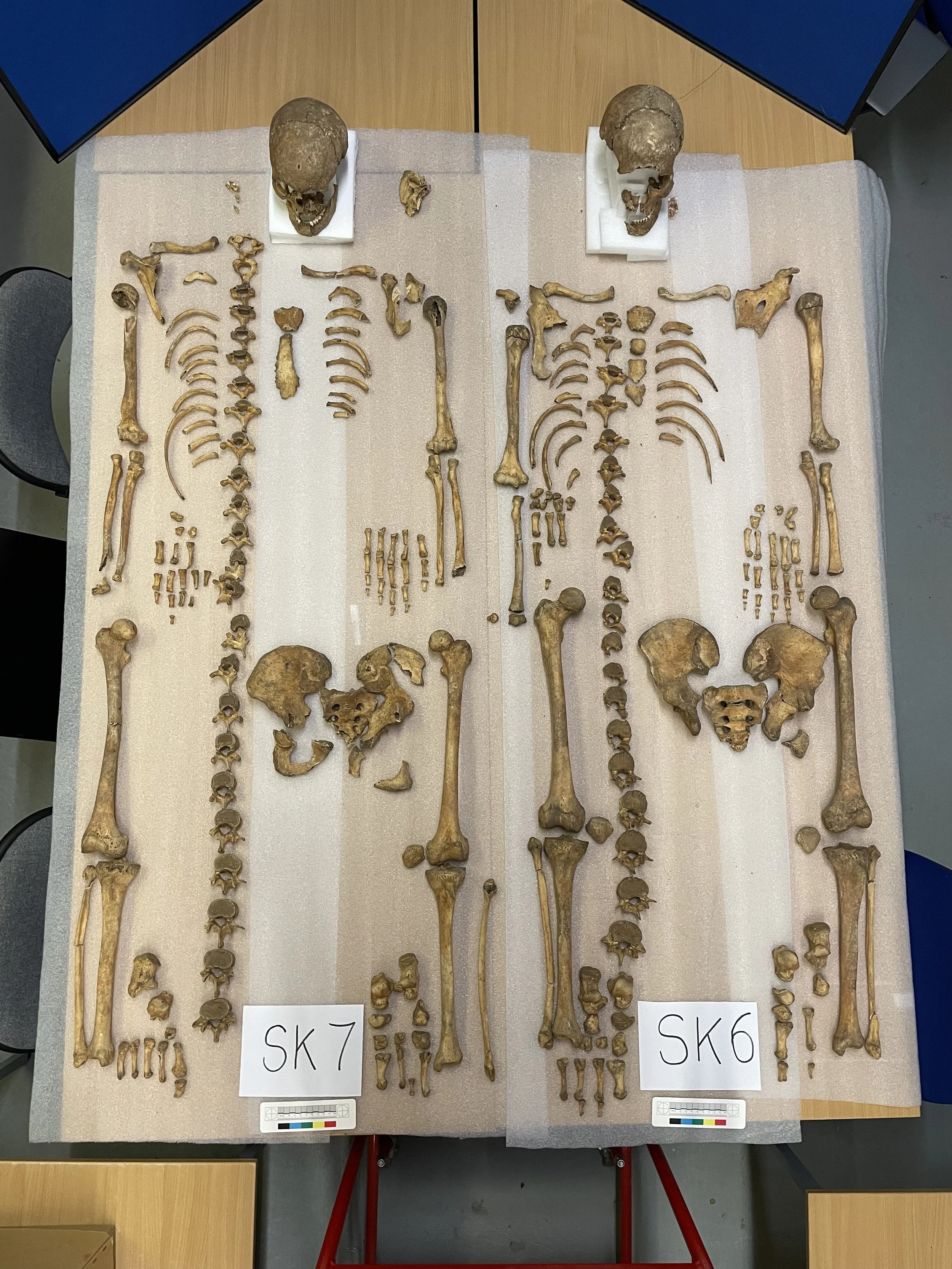
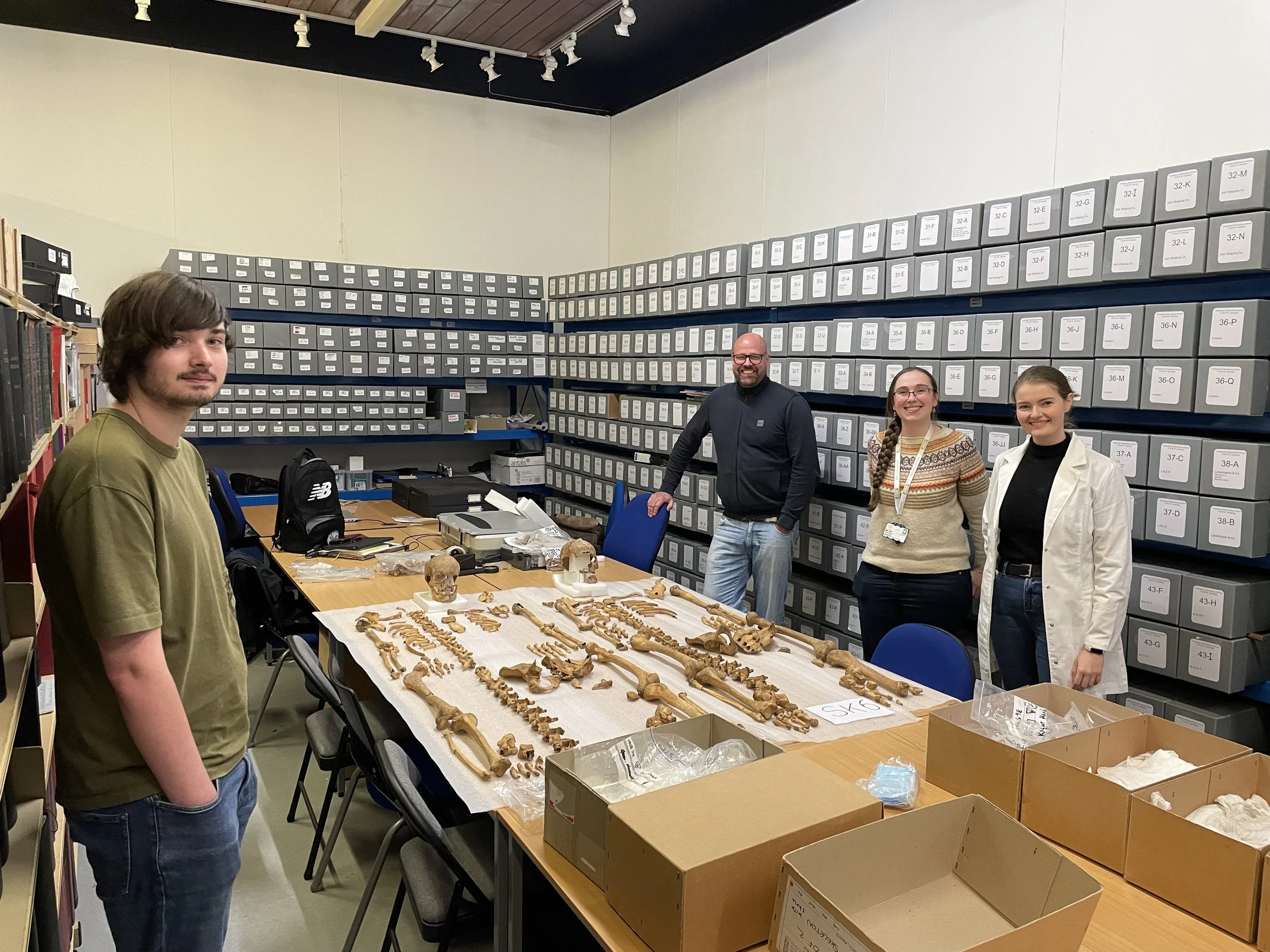
The team concluded the session by carefully laying out the skeletons, a crucial process for identifying missing bones and examining evidence of trauma.
In addition, sampling was undertaken to obtain material for a new programme of radiocarbon dating, helping to refine the chronological framework of these individuals. Samples were also taken for isotope analysis, which will contribute to our understanding of diet, mobility, and geographic origin.
Alongside this work, high-resolution 3D models of the skulls were produced, forming the basis for future facial reconstructions that will bring these individuals to life and provide a powerful public engagement element to the project.
Explore the 3D models and how archaeologists conduct facial reconstruction:
This visit represents a significant step forward in integrating new scientific data with the broader aims of the project, helping to build a clearer picture of the people who lived and died during the final phase of Roman Britain’s coastal defences.
We would like to extend our sincere thanks to Rosie Banens for facilitating access to the material and supporting the team throughout the visit.
More updates will follow as analysis progresses.